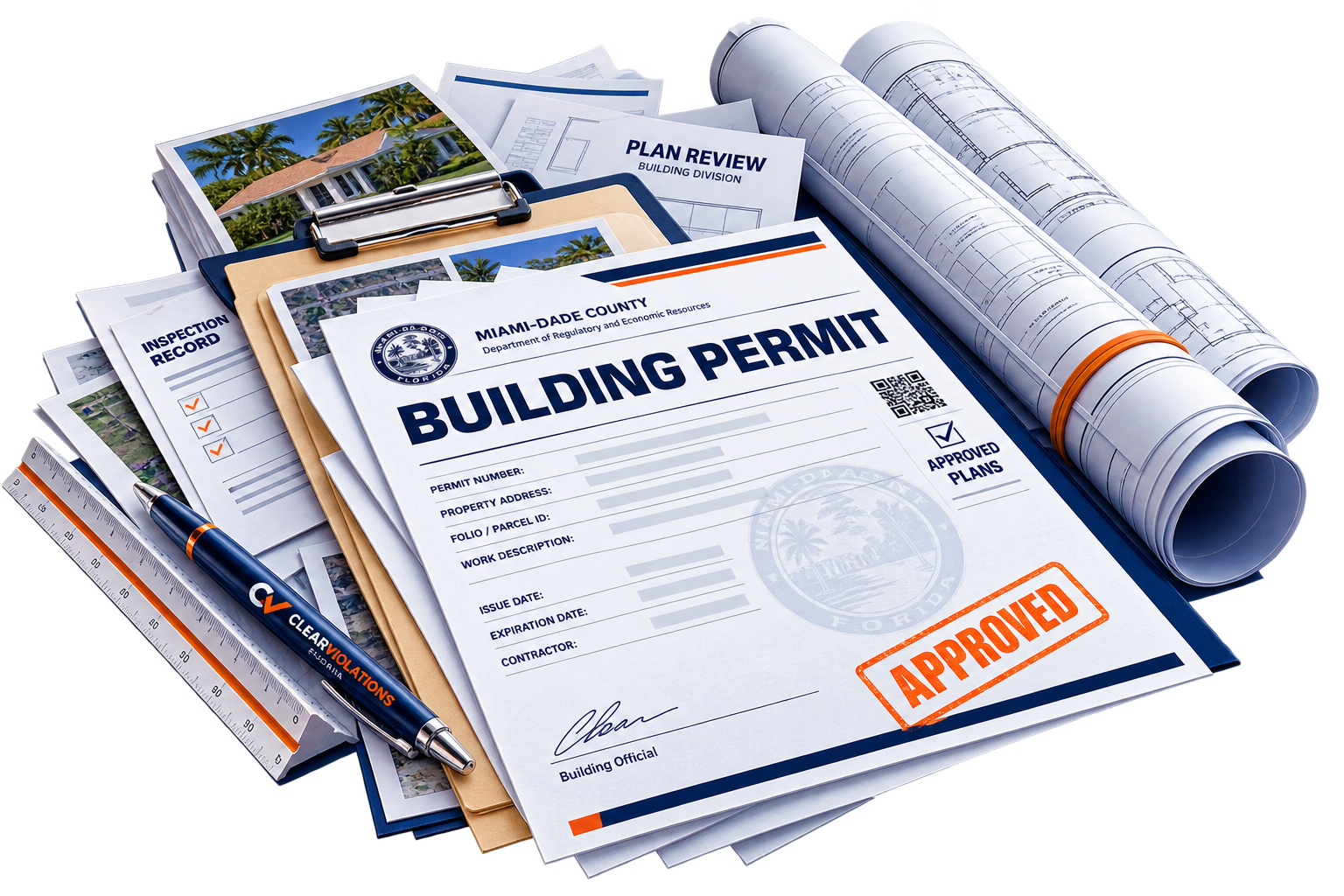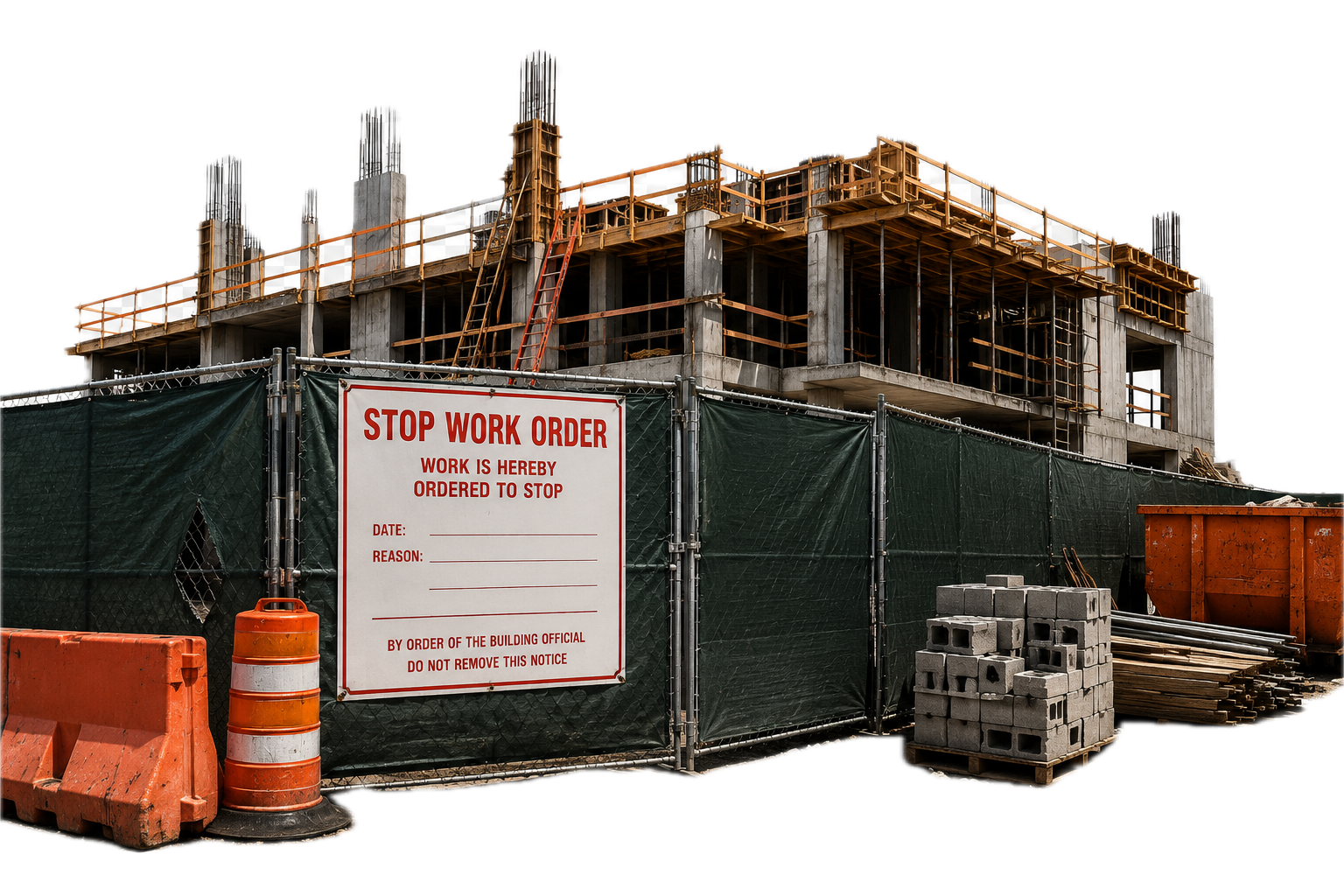
In Florida real estate, open permits are one of the quietest deal-killers there is. A home can look move-in perfect and still carry a permit from a roof replacement or addition that was never finaled years ago. That open permit doesn't matter — until a title search or a lender finds it, and suddenly the closing is on hold.
Whether you're buying or selling, the move is the same: find out about permit issues early, on your own timeline, instead of scrambling under a closing deadline. Here's how each side should handle it. If a deal is already at risk, [we specialize in fast closeout for transactions](/contact).
Why open permits derail closings
The problem isn't the permit itself — it's who finds it and when. Open permits almost always come to light at the least convenient moment.
- Title companies flag them during the title search.
- Lenders may refuse to fund until they're cleared.
- Municipalities can require closeout before transferring certain approvals.
- They raise questions about whether the work was ever done to code.
If you're the seller
The single best thing a seller can do is pull the property's full permit history *before* listing. That turns a potential closing emergency into a manageable pre-listing task. If there are open or expired permits, you have time to close them out calmly instead of under a ticking contract deadline — and a clean permit record is a genuine selling point.
- Request the permit history as part of listing prep.
- Close out anything open before you're under contract.
- Keep the final approvals and Certificates of Completion on hand.
- Disclose known permit issues to avoid trouble later.

If you're the buyer
Don't assume a great-looking home has a clean permit record — the two are unrelated. Request the permit history early in your due diligence and make permit closeout an explicit condition of the contract, so responsibility for clearing any open permits is spelled out in writing before you close.
- Order the permit history during your inspection period.
- Compare the permits on file against visible renovations.
- Put permit closeout responsibility in the contract, in writing.
- Don't take on someone else's unpermitted work unknowingly.
Who pays to close the permit?
There's no fixed rule — it's a negotiation. Traditionally the seller resolves open permits since the work happened on their watch, but in a competitive market buyers sometimes agree to take it on. What matters is that the responsibility, the cost, and the deadline are written into the contract rather than left as an assumption.
Conclusion
Open permits don't have to cost you a deal — but they will if they're discovered late. Sellers should clear them before listing; buyers should hunt for them during due diligence and pin down responsibility in the contract. Either way, the earlier you look, the more control you keep. If you want the permit history pulled and any open permits closed on a transaction timeline, [we can move fast](/contact).