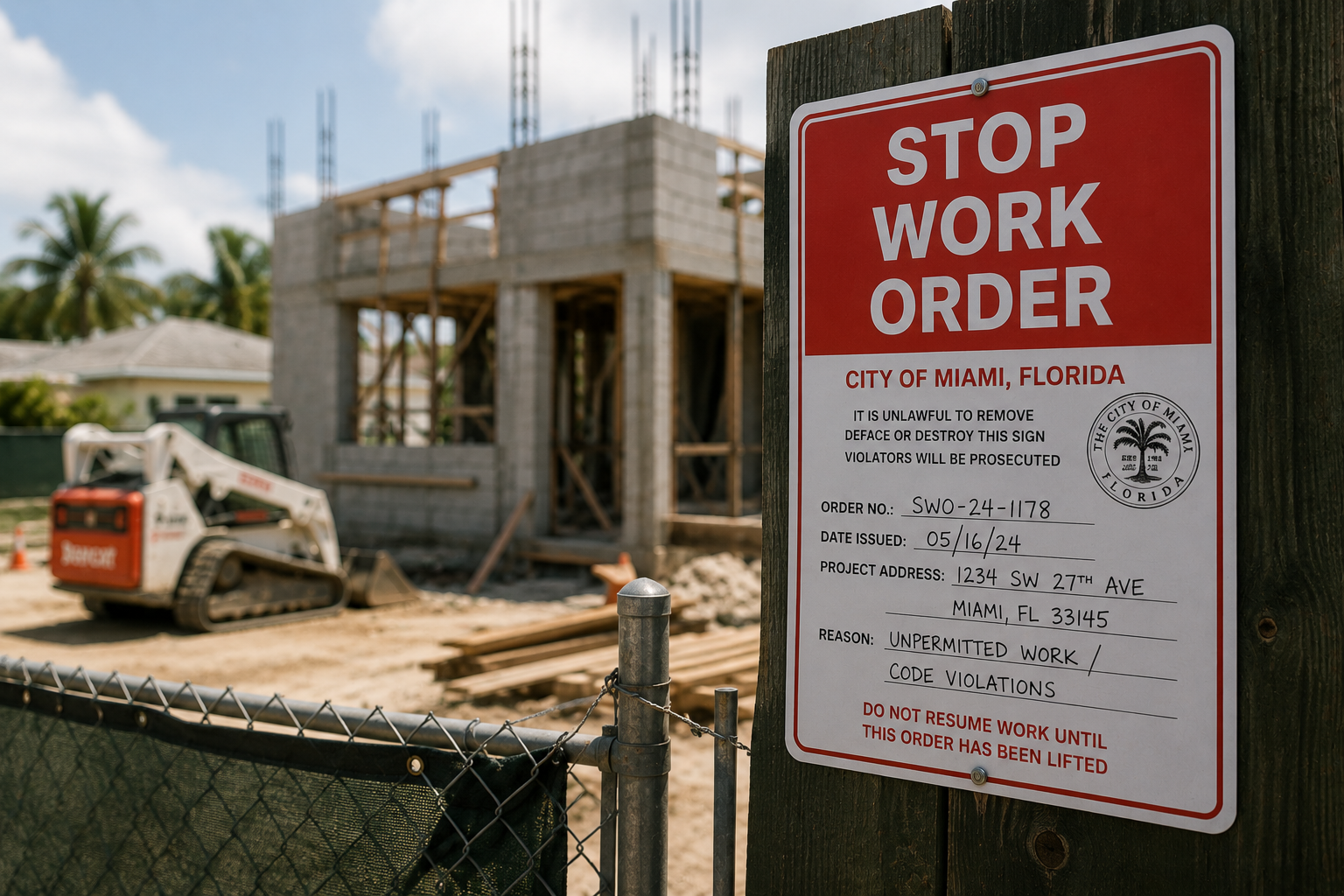
Few things stop a project cold like a stop work order — the notice (often a bright tag) posted by a building official that legally forces all construction to halt. Every day it stays up costs money in idle crews and blown schedules.
The good news: a stop work order is a specific, fixable problem. It's issued for a defined reason, and once you address that reason and satisfy the building department, work can resume. Here's how to do it the right way — and what not to do. If your site is shut down right now, [we can move quickly to get it lifted](/contact).
Why stop work orders get issued
A building official issues a stop work order when something makes it unsafe or unlawful to continue. Knowing which reason applies to you is the first step, because the fix is different for each.
- Working without any permit at all.
- An expired permit that was never renewed.
- Doing work beyond what the permit authorized.
- An immediate safety hazard on the site.
- Failing to call for required inspections along the way.
The one thing you must not do
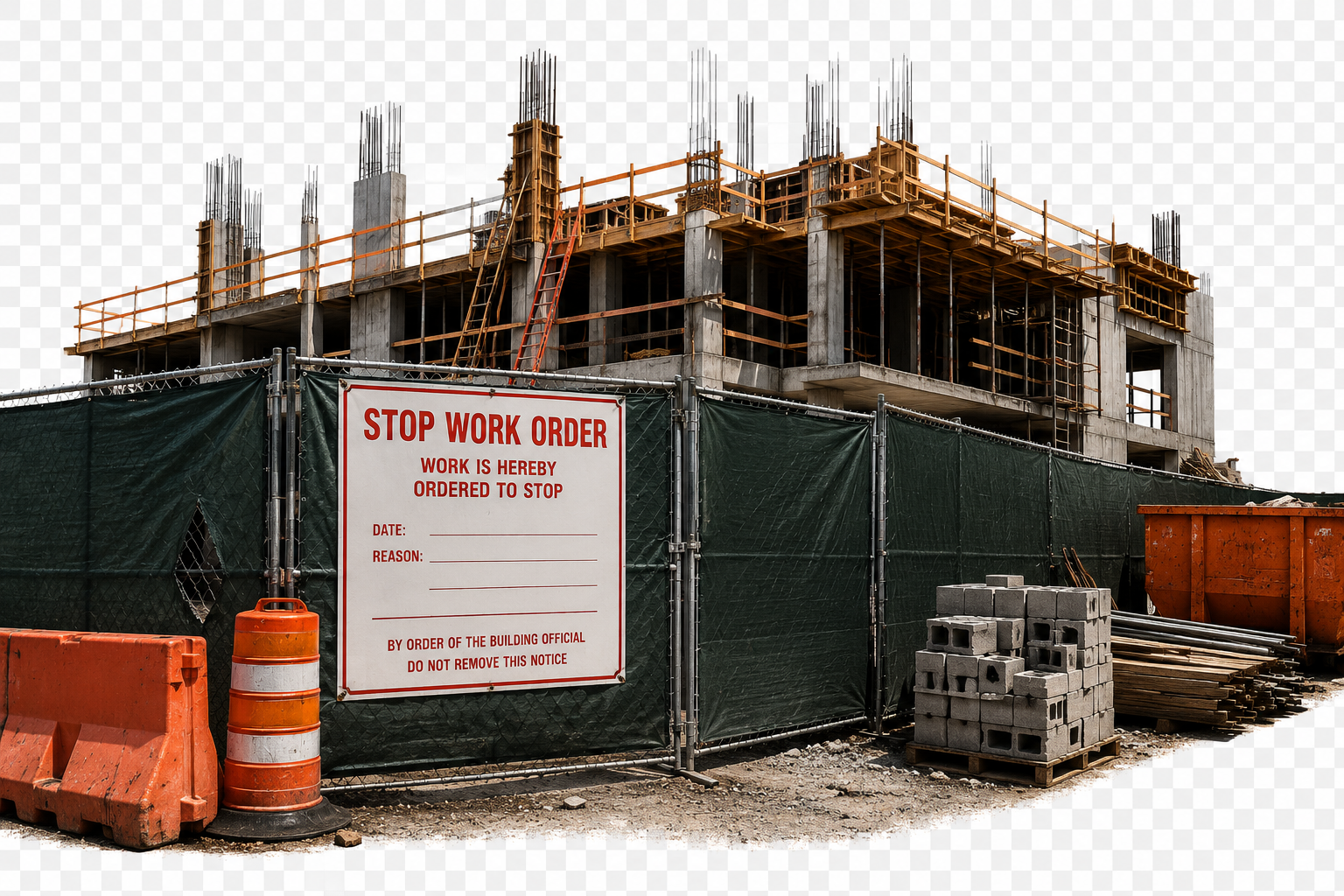
Do not keep working. It's tempting to "just finish" a section, but continuing after a stop work order is posted almost always makes things worse — additional fines, a harder relationship with the building department, and sometimes a requirement to undo the extra work. Treat the halt as absolute until you have written authorization to resume.
Step 1 — Identify the exact trigger
Read the order and, if anything is unclear, contact the building department or the official who issued it. You need to know precisely what caused it — a missing permit, an expired one, or out-of-scope work — because that determines everything you do next.
Step 2 — Correct the root cause
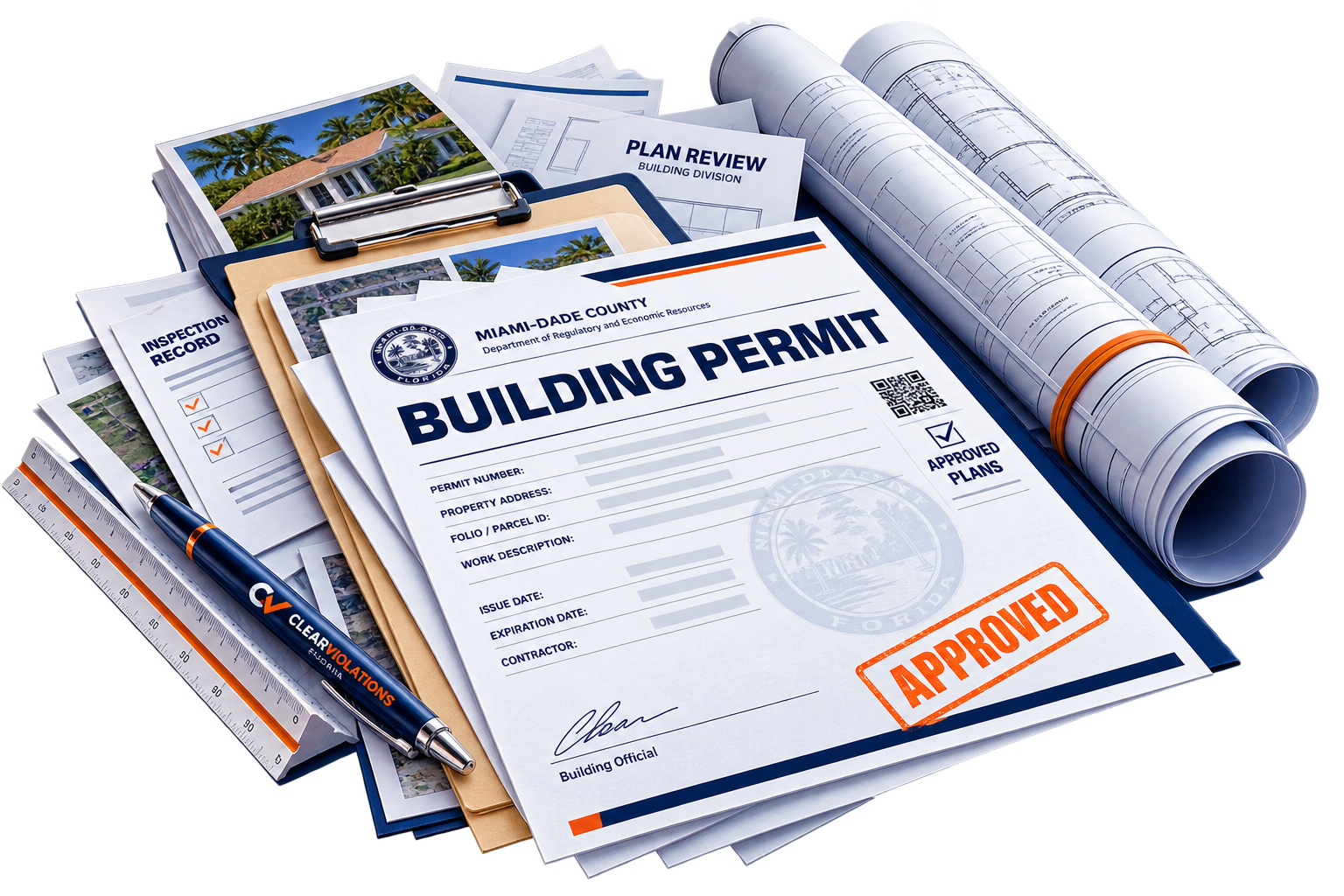
Fix whatever triggered the order. In practice that usually means bringing the paperwork into line with the physical work.
- No permit? Apply for the correct permit (often after-the-fact).
- Expired permit? Renew or re-open it.
- Out-of-scope work? Revise the plans and permit to cover it.
- Safety hazard? Remedy it and document the fix.
Step 3 — Inspect and get written authorization
Once the underlying issue is resolved, the building department will typically inspect the site and, if everything checks out, issue written authorization to resume work. Do not restart until you have that in hand. Keep the paperwork — it's proof the order was properly lifted.
Conclusion
A stop work order feels like a crisis, but it's really a checklist: find the reason, fix it, prove it, and get written clearance to continue. The teams that resolve these fastest are the ones that stop immediately, engage the building department directly, and correct the paperwork behind the work. If you need that handled without losing more days, [let's talk](/contact).