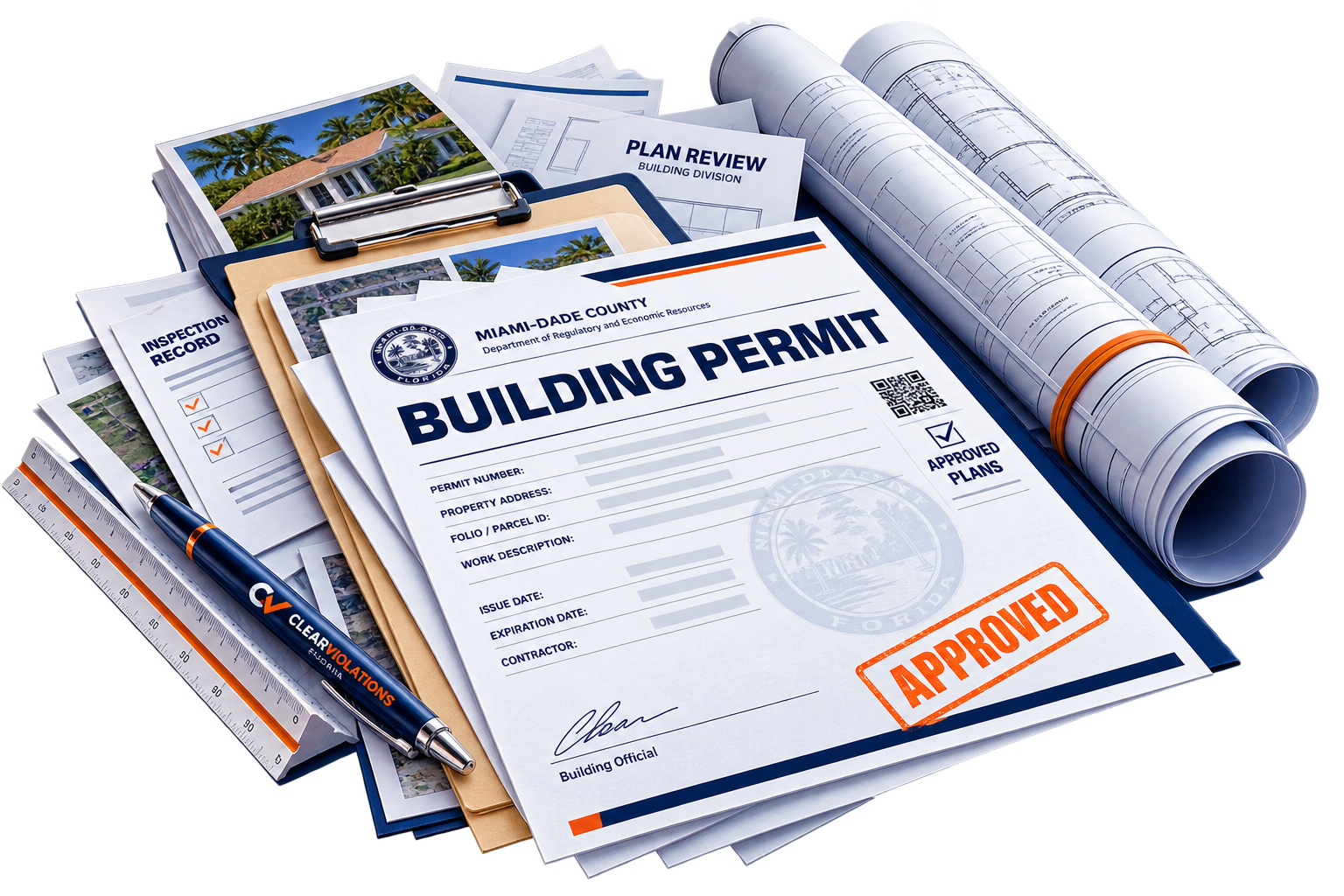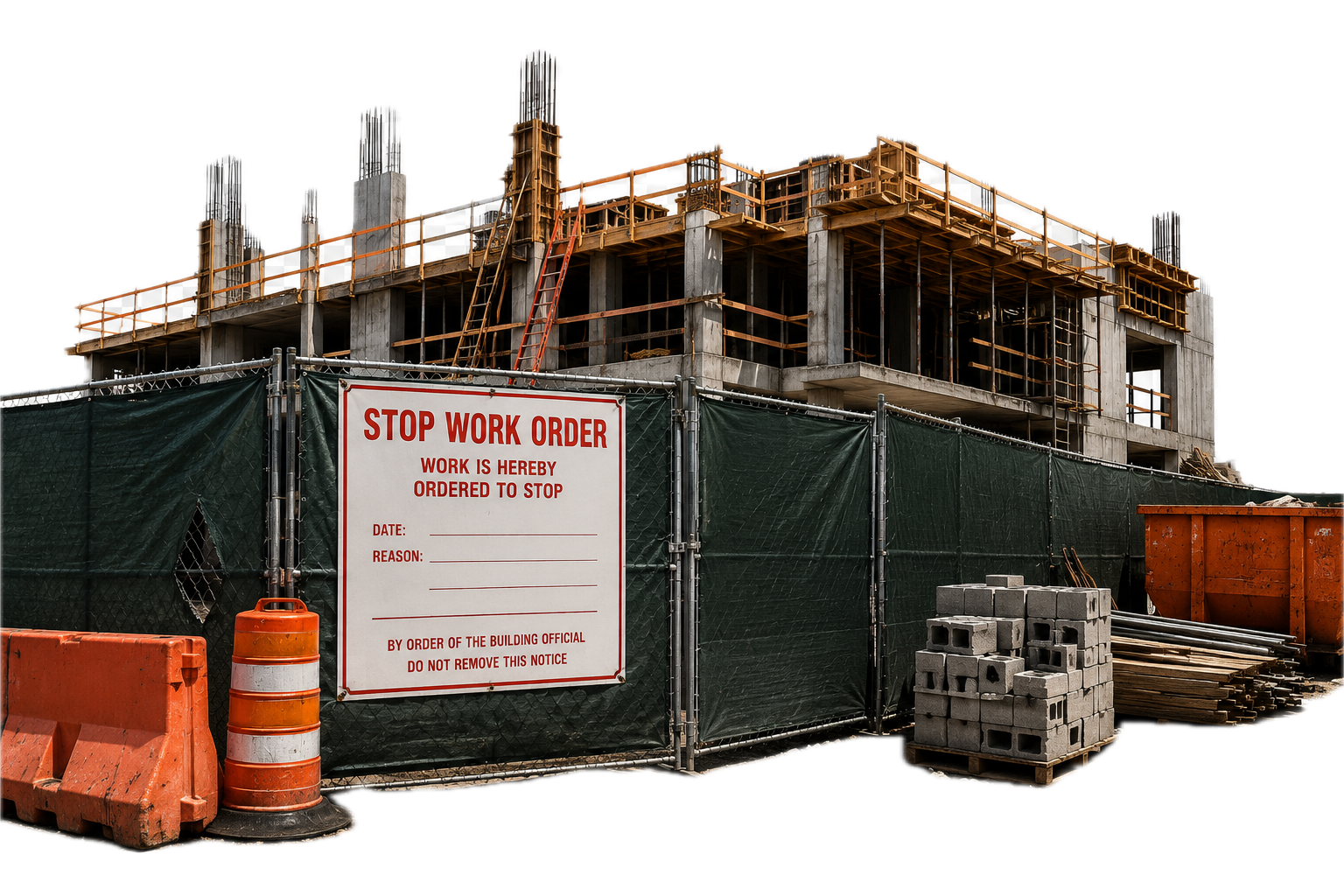
On a commercial deal, the permit and code history isn't a formality — it's a core part of due diligence that can swing the economics of the whole transaction. An unpermitted tenant build-out, an open permit, or a Certificate of Occupancy that doesn't match your intended use can turn into six-figure problems after you own the building.
The time to find these issues is during your inspection period, when they're negotiating leverage instead of sunk costs. Here's the permit-side checklist for commercial due diligence. For larger or time-sensitive deals, [our due-diligence team can run this review for you](/contact).
Pull the complete permit history
Start with the full permit record for the property from the local building department. You're building a picture of everything that's been done — and, just as importantly, everything that's still open.
- List every permit, its scope, and its current status.
- Flag anything marked open, expired, or not finaled.
- Match permits against the visible build-out and systems.
- Note gaps — major work with no corresponding permit is a red flag.

Verify the Certificate of Occupancy and use
The Certificate of Occupancy defines what the building is legally approved for. If you plan to use the space differently than its current CO allows — say, converting retail to a restaurant, or office to medical — you may need a change of use, additional permits, and code upgrades. Confirm the CO supports your business plan before you commit.
- Confirm a valid Certificate of Occupancy exists.
- Check that the approved use matches your intended use.
- Budget for a change of use if they don't align.
- Factor in parking, accessibility, and fire code triggered by the change.
Hunt for unpermitted tenant build-outs
Commercial spaces get reconfigured constantly as tenants come and go, and not all of that work is permitted. Interior walls, added restrooms, electrical, and HVAC changes done without permits are common — and they become the new owner's responsibility. Compare what you see on-site against what the permit record can account for.
Check for open code enforcement cases
Beyond permits, look for active code enforcement cases, fire marshal issues, or accessibility complaints. These can carry ongoing fines or liens and may impose deadlines you'll inherit at closing. An open case is something you want priced into the deal, not discovered afterward.
Turn findings into negotiating leverage
Everything you uncover during due diligence is leverage while you're still under contract. Open permits, unpermitted build-outs, and use mismatches can be addressed through a price adjustment, a seller closeout obligation, or an escrow holdback. Once you close, that leverage is gone and the problems are simply yours.
Conclusion
On commercial property, permit due diligence pays for itself many times over. Pull the full history, confirm the Certificate of Occupancy fits your plans, look hard for unpermitted build-outs and open cases, and convert what you find into price or terms before closing. The cost of checking is trivial next to the cost of inheriting the problem. If you want a thorough permit-and-code review on a deal, [get in touch](/contact).